


How to Switch from TITP to SSW in Japan: A Step-by-Step Guide
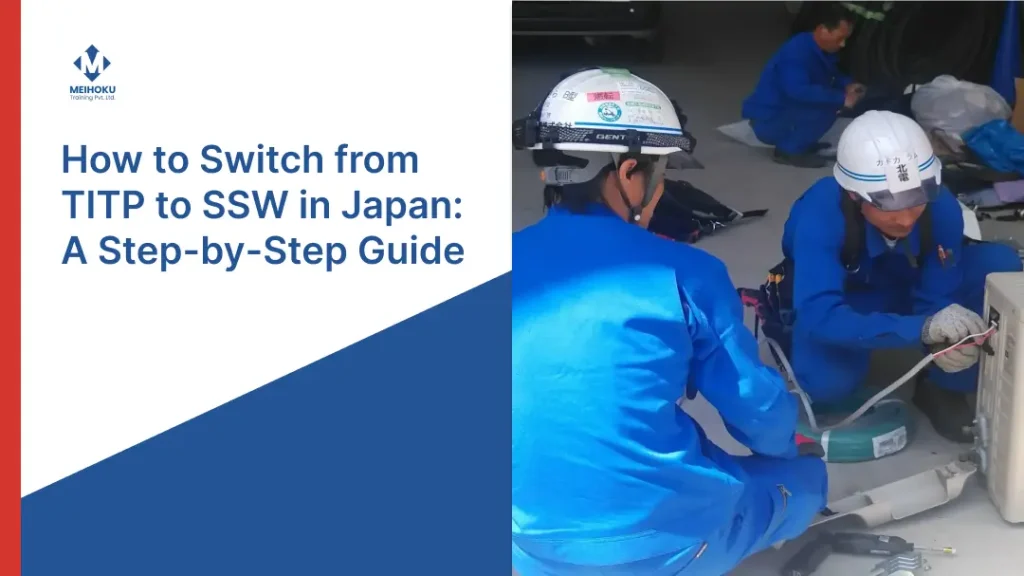
Many Nepali workers come to Japan under the Technical Intern Training Program (TITP) to gain work experience and develop new skills. After completing their training, many want to continue working in Japan with better opportunities. One of the best options is switching from a TITP visa to an SSW visa.
The Specified Skilled Worker (SSW) program allows foreign workers to continue working in industries facing labor shortages in Japan. Compared to the TITP, the SSW program offers better career opportunities, higher earning potential, and greater flexibility in changing employers.
If you’re currently on a training visa in Japan or completed your training visa, this guide explains who can switch, whether exams are required, the application process, costs, processing time, and the benefits of moving from TITP to SSW.
What Is the Difference Between TITP and SSW?
Although both programs allow foreigners to work in Japan, their purpose and benefits are different.
The Technical Intern Training Program (TITP) is designed to help foreign workers learn practical skills while working in Japan. The main goal is skill development rather than long-term employment. Workers are usually expected to return to their home country after completing the program.
The Specified Skilled Worker (SSW) visa, on the other hand, is a long-term employment program introduced to fill labor shortages in specific industries. Under the SSW program, workers are hired as regular employees and receive salaries similar to Japanese workers performing the same job.
Here’s a quick comparison of TITP vs SSW:
Feature | Technical Intern Training Program (TITP) | Specified Skilled Worker (SSW) |
Purpose | Skill transfer to developing countries (training visa in Japan) | Address labor shortages in specific industries (working visa in Japan) |
Legal Status | Trainee | Worker |
Job Mobility | Generally cannot change employers; tied to the training organization | Can change employers within the same designated SSW field |
Duration | Up to 3 or 5 years (depending on the program phase) | SSW (i): Up to 5 years; SSW (ii): Indefinite renewals with a pathway to Permanent Residency |
Salary | Often lower, focused on training allowance (average ¥177,800/month) | Generally higher, comparable to Japanese workers (average ¥180,000–¥250,000/month) |
Family Stay | Not permitted | SSW (ii) allows family accompaniment |
Who Can Switch from TITP to SSW?
Not every technical intern is automatically eligible to switch to an SSW visa. The primary requirement is the successful completion of your Technical Intern Training Program while meeting certain eligibility requirements.
Proper TITP preparation in advance also helps avoid issues such as poor performance, language barriers, or documentation problems during the transition.
Generally, you may be eligible if you:
- Successfully complete your TITP program (at least 3 years)
- Have good work performance during your internship.
- Move into the same or a closely related industry under the SSW program.
- Meet the required Japanese language and skill requirements (if applicable).
- You must have a clean record with Japanese immigration.
Note: Any unpaid taxes, health insurance arrears, or past immigration infractions can lead to denial of your SSW visa application.
Do You Need to Take the SSW Exams?
One of the significant advantages of transitioning from TITP to SSW is the possibility of exam exemptions. This can greatly simplify your SSW Preparation.
Full Exam Exemption (Same Field Transition):
If you successfully complete Technical Intern Training Level 2 in the same occupational field, you are generally exempt from both:
- Skill Evaluation Test
- Japanese Language Test
This means many TITP workers do not need to take the SSW exams before applying.
Partial Exam Exemption (Different Field Transition):
If you wish to switch to an SSW field that does not directly correspond to your TITP occupation, you will generally be exempt from the Japanese language test. However, you may need to pass:
- The required Skill Test for your industry
Proper SSW Preparation is important if you need to take these exams. Also, structured Japanese classes are highly recommended to improve communication at work and increase approval chances.
SSW Fields and Transition Eligibility
As of 2026, the Specified Skilled Worker program covers 16 designated fields, addressing labor shortages across various industries. Many of these fields offer excellent opportunities for former technical interns.
SSW Field | SSW (ii) Available | Common for TITP Transition |
1. Nursing Care | No | Yes |
2. Building Cleaning Management | Yes | Yes |
3. Industrial Product Manufacturing | Yes | Yes |
4. Construction | Yes | Yes |
5. Shipbuilding & Ship Machinery | Yes | Yes |
6. Automobile Repair & Maintenance | Yes | Yes |
7. Aviation | Yes | Yes |
8. Accommodation | Yes | Yes |
9. Automobile Transportation | No | Emerging |
10. Railway | No | Emerging |
11. Agriculture | Yes | Yes |
12. Fishery & Aquaculture | Yes | Yes |
13. Manufacture of Food & Beverages | Yes | Yes |
14. Food Service Industry | Yes | Yes |
15. Forestry | No | Emerging |
16. Wood Industry | No | Emerging |
Note: Fields 9, 10, 15, and 16 were added in 2024 and currently only offer SSW (i) status. Nursing Care does not have SSW (ii), but a separate visa for care workers provides a long-term option.

Step-by-Step Process to Switch from TITP to SSW
Switching from TITP to SSW involves several steps. Preparing your documents early can help avoid unnecessary delays.
Step 1: Confirm Your Eligibility
First, verify that you have met eligibility criteria. Ensure you have completed your TITP 2 in good standing and obtain your completion certificate from your supervising organization.
Check:
- Your TITP completion status
- Matching occupation
- Language requirements
- Skill requirements
- Required documents
If you’re unsure, consult your supervising organization or an immigration professional.
Step 2: Find an SSW Employer
Next, secure a job offer from a company licensed to hire SSW workers. This employer must meet specific financial, compliance, and support requirements set by the Japanese Immigration Services Agency. Your current TITP employer might be able to hire you under SSW if they meet these conditions. Many workers find jobs through recruitment agencies and online portals.
Step 3: Sign an Employment Contract
After receiving the job offer, sign your employment contract. The contract must outline your job position, working conditions, salary, and other terms, ensuring they meet the standard for that job category. The employer must also prepare a support plan for you, which is a mandatory requirement for SSW (i) visa holders.
Always read the contract carefully before signing.
Step 4: Apply for Change of Status of Residence
This is the most critical step. After signing the contract, submit an application to change your residence status from TITP to SSW. Your employer will typically handle much of the paperwork, but you will need to provide various documents.
Common documents include:
- Passport
- Residence Card
- Employment contract
- Employer’s supporting documents
- TITP completion certificate
- Change of Status of Residence application form
- Any additional documents requested by the Immigration Services Agency
The application is submitted to the regional office of Japan’s Immigration Services Agency. The SSW visa processing time is generally around 1 to 2 months, although it may vary depending on the Immigration Services Agency and individual circumstances.
Step 5: Begin Working Under SSW
Once your application is approved, you will receive your updated residence status. You can then officially begin working under your new working visa in Japan as an SSW employee.
Follow your employer’s workplace rules and continue improving your professional skills and Japanese language ability to build a successful career.
How Long Can the Transition Take?
The total transition period depends on document preparation, employer readiness, and immigration processing.
A typical timeline looks like this:
- Finding an employer: 2–8 weeks
- Preparing documents: 2–4 weeks
- Immigration review: 1–2 months
- Starting work after approval: Usually within a few days
In most cases, workers complete the transition within 2 to 3 months, although individual cases may vary.
Costs Involved
The cost of switching from TITP to SSW for Nepali workers in Japan depends on individual circumstances.
Possible expenses include:
- Visa Application Fee: ¥4,000 (about NPR 3,800) for a Change of Status of Residence.
- Medical Check-up: Approximately ¥10,000 – ¥20,000 (about NPR 9,500–19,000).
- Document Preparation: Costs for translation, notarization, or assistance from administrative scriveners (Gyoseishoshi) can vary.
- Travel Costs (if applicable): Only if you need to travel back to Nepal for document or labor permit procedures.
- Recruitment Agency Fees (Although not appropriate)
Recruitment agencies in Japan are not allowed to charge workers placement fees for SSW jobs. However, always verify any agency fees in both Nepal and Japan before making payments.

Benefits of Switching from TITP to SSW
Switching from a training visa in Japan to an SSW visa offers numerous advantages, significantly improving your quality of life and career prospects in Japan. Some of the biggest benefits of SSW visa include:
- Higher earning potential
- Better career opportunities
- Longer Stay and Path to Permanent Residency
- Family Accompaniment
- Salaries comparable to Japanese workers in similar roles
- Opportunity to gain advanced skills
- Better job stability
The SSW workers salary depends on the industry, company, location, and experience. However, SSW employees generally receive wages that are equal to Japanese workers performing the same work under similar conditions.
Common Mistakes to Avoid
To ensure a smooth transition, be aware of these common pitfalls. Many applications face delays or even SSW visa rejection because of avoidable mistakes.
Some common errors include:
- Applying before completing TITP requirements.
- Choosing an SSW field that does not match previous work experience.
- Submitting incomplete documents.
- Signing employment contracts without fully understanding the terms.
- Missing immigration deadlines.
- Using unauthorized recruitment agencies.
- Ignoring language requirements when exams are necessary.
Proper TITP preparation and continuous improvement through a japanese language institute or japanese language courses can greatly reduce these risks and improve success chances.
Final Thoughts
Switching from a Technical Intern Training Program to a SSW visa in Japan can open the door to better career opportunities, higher salaries, and a longer future in Japan. While the process involves several steps, proper planning makes the transition much easier.
Before you apply for an SSW visa, confirm your eligibility, gather all required documents, and choose a reliable employer. If exams are required, start your SSW Preparation early and continue improving your Japanese language skills.
For many Nepali workers, moving from TITP to SSW is not just a visa change, it’s an opportunity to build a stable career, gain valuable international experience, and create a brighter future in Japan.
Frequently Asked Questions
1. Can I switch from TITP to SSW in Japan?
Yes, you can switch from TITP to SSW after successfully completing your Technical Intern Training Program and meeting eligibility requirements such as job match, good performance, and immigration compliance.
2. Who is eligible to switch from TITP to SSW?
You are generally eligible if you:
- Complete at least 3 years of TITP training
- Have good work performance
- Work in the same or related industry
- Meet language and skill requirements (if needed)
- Have a clean immigration and legal record
3. Is SSW better than TITP?
Yes, SSW is generally better because it offers higher salary, more freedom, long-term residency options, and better career growth compared to TITP.
Start Your Journey Today
Admission for the 2025 intake is now open. Seats are limited. Contact us to schedule a free counseling session.
MEIHOKU TRAINING PVT. LTD.

Call Us
+977 9802325688, 01-4031688

Email Us
meihokunepal@gmail.com

Our Location
Sukedhara-04, Akhanda Marg, Kathmandu, Nepal