


Importance of Japanese Classes for JLPT Exam Success

Learning the Japanese language can be exciting, but preparing for the JLPT exam often becomes a real challenge for most learners. The Japanese Language Proficiency Test (JLPT) is a globally recognized examination that assesses and certifies the Japanese language ability for non-native speakers. Passing the JLPT is an important step for those who plan to study, work, or live in Japan.
While self-study is possible, joining professional Japanese classes can make your learning faster and more effective. In this guide, we will explain how enrolling in a Japanese language course can help you prepare better and what you need to know about the JLPT exam in Nepal.
Why Structured Japanese Classes are Essential for JLPT Success
While self-study can be a starting point, enrolling in the best japanese language institute like Meihoku Training offers significant advantages for mastering the complexities of the JLPT. With expert guidance, a structured curriculum, and focused exam preparation, students gain the language proficiency and exam skills needed to succeed in the JLPT.
1. Comprehensive Curriculum and Expert Guidance
Most of the Japanese language schools in Nepal follow a curriculum perfectly designed to align with the JLPT syllabus, covering all five levels from N5 to N1. Experienced instructors provide valuable insights into common challenges and effective strategies for exam success. They simplify complex grammar points, explain subtle vocabulary meanings, and guide students through reading and listening exercises. This structured learning approach strengthens JLPT preparation and ensures every aspect is covered.
2. Focused Skill Development
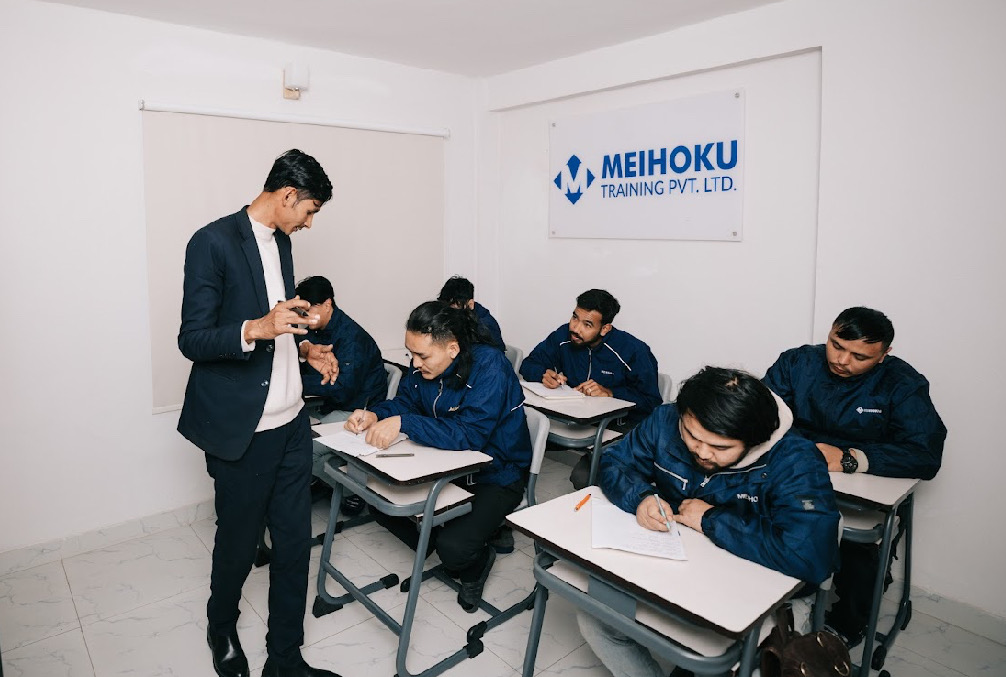
The JLPT checks four main skills. Japanese classes are specifically designed to develop these skills in an integrated manner.
- Vocabulary and Kanji: Classes teach vocabulary and kanji step by step. Teachers often use memory tricks and real-life examples. For example, the JLPT N5 test includes around 100 basic kanji and 800 words.
- Grammar: Japanese grammar can be challenging due to its unique sentence structure. Enrolling in class provides clear explanations, practice exercises, and immediate feedback, helping students grasp complex grammatical patterns essential for higher JLPT levels.
- Reading Comprehension: Through guided reading of various texts, from simple notices to complex articles, students develop strategies to understand the context. This is crucial for navigating the diverse reading passages in the JLPT.
- Listening Comprehension: Regular listening practice with authentic Japanese audio materials, including conversations and announcements. This helps improve understanding of natural speaking speed and pronunciation. Many classes also give mock listening tests like the real exam.
3. Mock Tests and Performance Analysis
One of the most significant benefits of Japanese classes is access to mock tests and practice exams that’s similar to the real JLPT exam. These tests help students improve time management, become familiar with the exam structure, and reduce test anxiety.
After each mock exam, instructors provide detailed performance analysis, identifying strengths and areas that need improvement. This personalized feedback helps learners adjust their study strategies and focus on specific skills that require further development, ensuring better preparation and higher confidence for the actual exam.
4. Peer Learning and Cultural Immersion
Learning in a classroom environment encourages a supportive community where students can actively practice speaking, ask questions, and learn from one another’s experiences. This interactive setting helps build confidence and improve communication skills.
In addition, Japanese language school like Meihoku Training integrate cultural elements into their Japanese language courses, offering students a deeper understanding of Japanese customs and etiquette. This cultural immersion makes learning more engaging while also preparing students for life in Japan.

Taking the JLPT Exam in Nepal
For Nepali students, understanding how the JLPT exam works in Nepal is very important.
- The exam is usually conducted twice a year, in July and December. Each test has a specific application period before the exam date.
- Students must register online, pay the exam fee (around NPR 2,000–3,000, though prices may vary), and receive a test voucher. This voucher is required to enter the exam center on the exam day.
JLPT Registration Process (Step-by-Step)
To apply for the JLPT exam, candidates must complete their registration during the official application period. The process is usually done online and includes the following steps:
- Step 1: First, check your Japanese level and choose the JLPT level you want to take (from N5 to N1).
- Step 2: Create an account and fill out the online application form through the official JLPT website or the local host institution’s website.
- Step 3: Upload the required documents and passport-sized photos as mentioned in the form, and select your preferred test centre location.
- Step 4: Pay the exam fee and complete your registration to confirm your application.
- Step 5: Download and print your test voucher, as it is required on the exam day for entry.
- Step 6: Bring the original Test Admission Ticket, which is usually sent to your registered address 1–2 weeks before the exam, and take it to your test centre on the exam day.
Conclusion
For Nepali students who want to study, work, or live in Japan, passing the JLPT is a very important milestone. A strong JLPT score is important for anyone applying for a working visa in Japan, as language ability is a key requirement for employment in Japan.
Joining well-structured Japanese classes in Nepal gives a strong foundation, expert guidance, and proper exam preparation to succeed in the JLPT. Beyond language training, these classes often support students with practical preparation such as understanding visa requirements, interview readiness, and guidance for programs like SSW and TITP.
With increasing opportunities in Japan and a growing Nepali community there, investing in quality Japanese language education is a smart and important step toward a better future.
Frequently Asked Questions
1. What is N1, N2, N3, N4, N5 in Japanese?
N1, N2, N3, N4, and N5 are the five levels of the Japanese Language Proficiency Test (JLPT). N5 is the beginner level, while N1 is the most advanced. As you move from N5 to N1, the difficulty increases in terms of vocabulary, kanji, grammar, reading comprehension, and listening skills.
2. Can I learn Japanese in 3 months?
Yes, it is possible to learn basic Japanese in 3 months with consistent study and proper guidance. In this period, many learners can achieve beginner-level proficiency and prepare for the JLPT N5 exam.
3. Is Japanese hard to learn?
Yes, Japanese is considered quite challenging to learn at first. However, with a structured learning approach, experienced teachers, and regular practice, Japanese becomes much easier to understand and master.
4. Which is the best Japanese language institute in Nepal?
The best Japanese language institute depends on factors such as teaching quality, experienced instructors, JLPT preparation support, and student success rates. Meihoku Training is one of the leading Japanese language institutes in Nepal, offering comprehensive Japanese language courses, JLPT-focused training, and specialized preparation for visa programs such SSW and TITP.
Start Your Journey Today
Admission for the 2025 intake is now open. Seats are limited. Contact us to schedule a free counseling session.
MEIHOKU TRAINING PVT. LTD.

Call Us
+977 9802325688, 01-4031688

Email Us
meihokunepal@gmail.com

Our Location
Sukedhara-04, Akhanda Marg, Kathmandu, Nepal