


SSW Interview Questions: Common Questions and How to Answer Them
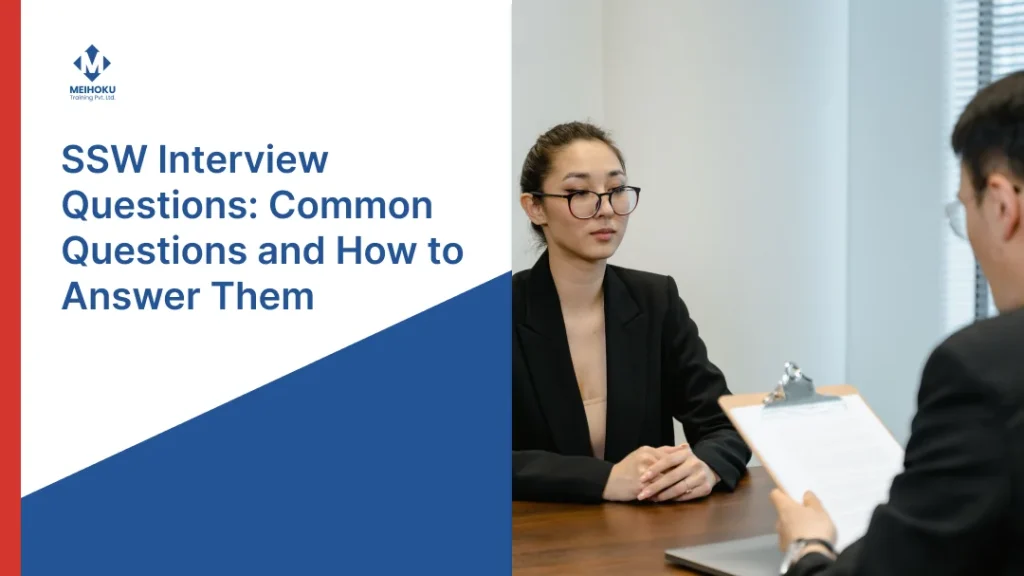
SSW interviews usually represent the last stage prior to receiving an employment offer for work in Japan. This interview is aimed at evaluating your Japanese proficiency, your skills and readiness to function in the Japanese business environment according to company standards. Candidates do not fail due to poor skills, but because they are not prepared for rather obvious questions.
This article offers some of the most frequently asked questions and provides sample answers in both English and Japanese. Use it to create your own answers, not just to learn them by heart.
What Employers Look for in an SSW Interview
When Japanese companies conduct the SSW interview, they do not try to trick you; they simply need confirmation on certain facts. The things that they check in general are:
- Your Japanese language skills: whether you are able to understand and give clear responses?
- Your work experience: does it correspond to the job application
- Your attitude: are you polite, honest, and ready to respect regulations
- Your commitment: are you ready to stay at the job for an appropriate amount of time
- Your visa: are you aware of your SSW visa status and required documents.
Honesty, calmness, and precision are more important than giving a perfect answer. If you have any doubt about the question, it is always better to clarify it.
Common SSW Interview Questions and Answers
Below are the questions candidates hear most often in an SSW job interview, with what the interviewer is really checking and a short sample answer in both languages.
1. Please Introduce Yourself / 自己紹介をお願いします
The interviewer wants to understand your basic background and assess how clearly and confidently you can communicate in Japanese. Briefly mention your name, age, hometown, education or work experience, Japanese level, and hobbies.
English Sample Answer:
First of all, thank you very much for giving me this opportunity. My name is Suman Thapa. I am 22 years old and I am from Kathmandu, Nepal. I completed my higher secondary education and have two years of experience working in the food service industry. I am currently studying Japanese and have passed the JLPT N4. In my free time, I enjoy playing football and listening to music. I would like to use my skills and experience to build my career in Japan.
Japanese Sample Answer:
まず、このような機会をいただき、ありがとうございます。スーマン・タパと申します。22歳で、ネパールのカトマンズ出身です。高校を卒業し、飲食業で2年間働いた経験があります。現在、日本語を勉強していて、JLPT N4に合格しました。趣味はサッカーをすることと音楽を聞くことです。これまでの経験とスキルを活かして、日本でキャリアを築きたいと思っています。
2. Why are you Interested in Working in Japan? / なぜ日本で働きたいのですか
The employer is looking for a real reason, not just “high salary.” You show your interest in Japanese work culture or long-term growth.
English Sample Answer:
I respect Japan’s work discipline and quality standards. I want to learn these skills and grow in my career while supporting my family.
Japanese Sample Answer:
日本の仕事の規律や品質へのこだわりを尊敬しています。そのスキルを学び、家族を支えながらキャリアを積みたいです。
3. Why Did You Choose the SSW Program? / なぜ特定技能を選びましたか
The interviewer wants to check if you clearly understand the SSW Program and just did not choose it randomly.
English Sample Answer:
I chose SSW because it matches my skills and gives me a legal path to work in my trained field. I want to contribute to the company while improving my skills.
Japanese Sample Answer:
特定技能は、自分の技能に合っており、学んだ分野で合法的に働ける制度だからです。会社に貢献しながら、技能を高めたいです。
4. How Did You Hear About Our Company? / 当社を何で知りましたか
This is not a trick question. The interviewer just wants to hear a simple, and honest answer.
English Sample Answer:
I found your company through my training institute in Nepal, and I also read about your job postings online.
Japanese Sample Answer:
ネパールの研修機関を通じて御社を知り、求人情報もオンラインで確認しました。
5. Do You Have Any Prior Work Experience in This Job?
The employer wants to match your past experience to the job’s actual duties. You should be specific and honest about it.
English Sample Answer:
Yes. I worked in a food factory for two years. I prepared ingredients, packed products, cleaned equipment, and checked hygiene procedures.
Japanese Sample Answer:
はい、あります。食品工場で2年間働きました。材料の準備、商品の包装、機械の清掃、衛生管理を担当しました。
6. What Are Your Strengths and Weaknesses? / あなたの長所と短所は何ですか
Give one real strength with an example, and one honest weakness with how you improve it.
English Sample Answer:
My strength is that I am responsible and hardworking. I always take my tasks seriously and try to complete them properly. My weakness is that I sometimes speak slowly in Japanese, so I practice daily and confirm instructions before starting.
Japanese Sample Answer:
私の長所は、責任感が強く、真面目に仕事に取り組むところです。任された仕事には責任を持って、丁寧に取り組むようにしています。短所は、日本語を話すときに少しゆっくり話してしまうことです。そのため、毎日練習し、仕事を始める前に指示をしっかり確認するようにしています。
7. What Is Your Japanese Level? / 日本語のレベルはどのくらいですか
Be honest about your Japanese level. Do not exaggerate this answer because the interview itself will reveal your true level.
English Sample Answer:
I passed JLPT N4. I can manage daily conversation and simple work instructions. I am still learning technical vocabulary.
Japanese Sample Answer:
JLPT N4に合格しました。日常会話と簡単な仕事の指示は理解できます。専門用語はまだ勉強中です。
8. How Are You Studying Japanese? / どのように日本語を勉強していますか
The employer wants to know how disciplined you are and how much effort you are putting to learn the language and to work in Japan, which employers value highly.
English Sample Answer:
I study one hour every day using textbooks and Japanese conversation apps, and I attend language classes twice a week.
Japanese Sample Answer:
毎日1時間、教科書と会話アプリで勉強し、週に2回日本語の授業に通っています。
9. What Will You Do If You Do Not Understand Instructions? / 指示が分からないとき、どうしますか
Employers want to hear that you will ask rather than guessing and making a mistake.
English Sample Answer:
I will politely ask the supervisor to repeat or explain the instruction. I will repeat it back to confirm before I begin.
Japanese Sample Answer:
上司にもう一度説明していただくようにお願いします。始める前に、聞いた内容を繰り返して確認します。
10. Are You Comfortable Working in Any Work Location? / どの勤務地でも大丈夫ですか
Employers prefer more if you are flexible but If you have real limits, state them clearly and honestly.
English Sample Answer:
Yes, I am flexible and willing to work at any location assigned by the company.
Japanese Sample Answer:
はい、会社が指定するどの勤務地でも柔軟に対応できます。
11. How Do You Handle Mistakes at Work? / 仕事でミスをしたらどうしますか
The interviewer wants to see how responsibly you respond to mistakes. Show that you can acknowledge the mistake, report it promptly, correct it, and learn from it rather than trying to hide it.
English Sample Answer:
If I make a mistake at work, I first inform my supervisor and take responsibility for it. I then correct the mistake as soon as possible and make sure I understand how to avoid making the same mistake again.
Japanese Sample Answer:
仕事でミスをした場合は、まず上司に報告して、自分の責任として対応します。その後、できるだけ早くミスを直し、同じミスを繰り返さないように気をつけます。
12. Can You Work Overtime or Different Shifts? / 残業やシフト勤務はできますか
You should be honest about your availability rather than agreeing to everything.
English Sample Answer:
I plan to work here long term, ideally more than five years, while continuing to build my skills.
Japanese Sample Answer:
できれば5年以上、長期的にこちらで働き、スキルを磨いていきたいと考えています。
13. How Long Do You Plan to Work in Japan? / 日本でどのくらい働きたいですか
Employers invest in training, so they want candidates planning a reasonable, stable stay.
English Sample Answer:
I plan to work here long term, ideally more than five years, while continuing to build my skills.
Japanese Sample Answer:
できれば5年以上、長期的にこちらで働き、スキルを磨いていきたいと考えています。
14. When Can You Start Working? / いつから働けますか
You should give a realistic date based on your visa processing and current commitments.
English Sample Answer:
I can start within one to two months after my visa and travel arrangements are finalized.
Japanese Sample Answer:
ビザと渡航の手続きが完了次第、1〜2ヶ月以内に勤務を開始できます。
15. What Are Your Salary Preferences?
The safest answer is to follow the company’s standard salary based on the job rather than naming a high number early.
English Sample Answer:
I would like to follow the company’s standard salary for this position. Before signing the contract, I would like to confirm the basic salary, deductions, overtime pay, housing costs, and other allowances.
Japanese Sample Answer:
この仕事については、御社の規定に従いたいと思っています。契約を結ぶ前に、基本給、控除、残業代、住居費、その他の手当について確認したいです。
16. What Is Your Visa Status? / 在留資格の状況を教えてください
You should be precise about whether you are applying from overseas or already hold a status in Japan.
English Sample Answer:
I am currently in Nepal. I have passed the Japanese language and food service skill tests, and I am preparing the necessary documents for the Certificate of Eligibility application.
Japanese Sample Answer:
現在、ネパールにいます。日本語の試験と外食業の技能試験に合格しており、現在、在留資格認定証明書の申請に必要な書類を準備しています。
SSW Interview Questions by Job Sector
| Sector | Typical Extra Question | What They Check |
| Nursing | How would you speak to an elderly resident who refuses care? | Patience, communication, safety awareness |
| Food Service | How do you handle a customer complaint? | Customer service and calm reporting |
| Construction | Have you used this specific tool or machine before? | Direct hands-on skill match |
| Manufacturing | Are you comfortable with repetitive tasks and strict hygiene rules? | Consistency and quality focus |
| Automobiles | Can you read basic diagrams or checklists? | Technical understanding and precision |
Common SSW Interview Mistakes to Avoid
Even candidates who have prepared well end up getting rejected due to minor and preventable errors. Here are some of the most common mistakes you should try to avoid.
- Giving Memorized or Robotic Answers: It sounds robotic when one provides memorized answers since such candidates cannot go on when asked a follow-up question. Instead, understand the main points in your answer instead of remembering the exact wording.
- Mentioning Salary as the Sole Reason for Joining Employment: The salary may be a good point but if it is the sole reason, employers will see this as evidence that you are not committed in the long run. Provide additional reasons, such as professional development, personal interests or learning the Japanese work culture.
- Providing False Information regarding Your Experience: Providing information that you have never possessed will quickly be found out by the employer whether in an interview setting or during work itself. Just state what skills or experiences you do have and the willingness to learn.
- Answering Rapidly and Providing Too Long Answers: Answering rapidly or giving answers lasting more than several minutes is very confusing especially when it is in a foreign language. Answers should last between 30 and 90 seconds and always give a few seconds of pause before providing answers.
- Failing to Ask for Clarification When You Do Not Understand: Guessing at a question and answering incorrectly leaves a worse impression than asking for it to be repeated. Use a polite phrase like “もう一度お願いできますか” (Could you say that again, please?) whenever needed.
What to Do on the Day of Your SSW Interview
Following these Simple habits make a strong first impression:
- Join an online interview five to ten minutes early, or arrive early for an in-person meeting.
- Wear clean, simple, professional clothing. Keep your camera, microphone, and background ready.
- Prepare your resume, test certificates, passport or residence card, and job offer details.
- Greet the interviewer politely: よろしくお願いいたします.
- Listen fully before answering. If needed, say: もう一度お願いします (Mō ichido onegaishimasu, “Please say that again”).
- Ask about duties, working hours, salary, deductions, dormitory fees, transportation, support, and the next step.
Conclusion
An SSW interview rewards preparation, honesty, and clear communication far more than a perfect script, so practice these questions, learn from common mistakes, and walk in ready to speak with confidence.
If you want that preparation to be structured rather than left to guesswork, Meihoku Training offers dedicated SSW training programs in Nepal, practical Japanese language courses, and a guided training process that prepares you for both the required exams and the real interview questions employers ask. With proper training and honest preparation, your SSW interview becomes a much easier step toward working in Japan.
Frequently Asked Questions
1. Is an interview required for SSW jobs?
Yes. Almost all SSW positions require at least one interview, usually online first and sometimes a second in-person round, before a job offer is issued.
2. Is the SSW interview conducted in Japanese?
In most cases, yes. The interview is mainly in Japanese, even at a basic level, because employers need to confirm you can follow simple workplace instructions.
3. What Japanese level is needed for an SSW interview?
JFT-Basic or JLPT N4 is generally the minimum expected level. Simple daily conversation ability is usually enough to pass the interview stage.
4. Can I pass an SSW interview without work experience?
Yes, some SSW fields accept candidates without direct work experience if they pass the required skills test. Being honest about your experience level is more important than pretending to have skills you don’t.
5. What should I do if I don't understand an interview question?
Stay calm and politely ask the interviewer to repeat or explain again. For example:「もう一度お願いできますか」(Could you say that again, please?). Guessing and answering incorrectly leaves a worse impression than asking for clarification.
Start Your Journey Today
Admission for the 2025 intake is now open. Seats are limited. Contact us to schedule a free counseling session.
MEIHOKU TRAINING PVT. LTD.

Call Us
+977 9802325688, 01-4031688

Email Us
meihokunepal@gmail.com

Our Location
Sukedhara-04, Akhanda Marg, Kathmandu, Nepal