


Basic Salary in Japan in 2026: Complete Guide for Foreign Workers
Japan continues to be one of the most preferred work destinations for Nepalese and other foreign workers, mainly due to its stable economy and structured salary system. As the global job market evolves, understanding the basic salary in Japan and the overall financial landscape is crucial for anyone considering a career here.
This comprehensive guide aims to provide Nepalese job seekers with up-to-date information on salaries, living costs, and job prospects in Japan for 2026, helping you make informed decisions.
Average Salary in Japan in 2026
The average salary in Japan in 2026 shows a positive view for foreign workers. According to recent data, the average annual salary for full-time professionals in Japan is approximately ¥6.2 million JPY, which translates to about ¥515,000 JPY per month. However, the official national average reported by Japan’s National Tax Agency for 2024 (released in 2025) is about ¥4.78 million JPY per year. This figure includes all types of jobs, including part-time and lower-income roles.
For Nepalese individuals, understanding the distinction between gross and net salary is vital. After mandatory deductions for income tax, residence tax, health insurance, and pension, workers typically take home around 70-75% of their gross pay. For instance, a gross monthly salary of ¥500,000 JPY might result in a take-home pay of ¥350,000–375,000 JPY.
Japan also has a special bonus system called shōyo (賞与). which is a standard part of annual compensation for most full-time employees. It is usually paid twice a year, in summer (June or July) and winter (December). When considering job offers in Japan, it is important to always check the bonus details. This helps you understand your total possible yearly income more clearly.
Minimum Wage in Japan
Japan’s minimum wage system is set at a prefecture level, so the hourly pay rate differs depending on the region.As of May 2026, the national average minimum wage is ¥1,121 per hour. This marks a significant milestone, as all 47 prefectures now have a minimum wage exceeding ¥1,000 per hour. The Japanese government is also planning to gradually increase the national average minimum wage to ¥1,500 per hour by the late 2020s.
For foreign workers planning a working visa in Japan, understanding these regional variations is crucial as they directly impact overall income. In general, larger cities and urban areas offer higher minimum wages due to their higher cost of living. Below is a table outlining the minimum hourly wages in key prefectures as of 2026:
Prefecture | Minimum Hourly Wage (¥) | Effective Date |
Tokyo | ¥1,226 | Oct 3, 2025 |
Kanagawa | ¥1,225 | Oct 4, 2025 |
Osaka | ¥1,177 | Oct 16, 2025 |
Saitama | ¥1,141 | Nov 1, 2025 |
Chiba | ¥1,140 | Oct 3, 2025 |
Aichi | ¥1,140 | Oct 18, 2025 |
Kyoto | ¥1,122 | Nov 21, 2025 |
Hyogo | ¥1,116 | Oct 4, 2025 |
Hokkaido | ¥1,075 | Oct 4, 2025 |
Ibaraki | ¥1,074 | Oct 12, 2025 |
Tochigi | ¥1,068 | Oct 1, 2025 |
Gunma | ¥1,063 | Mar 1, 2026 |
Niigata | ¥1,050 | Oct 2, 2025 |
Hiroshima | ¥1,050 | Oct 1, 2025 |
Miyagi | ¥1,038 | Oct 4, 2025 |
Fukushima | ¥1,033 | Jan 1, 2026 |
Iwate | ¥1,031 | Dec 1, 2025 |
Akita | ¥1,031 | Mar 31, 2026 |
Yamagata | ¥1,031 | Dec 23, 2025 |
Tottori | ¥1,030 | Oct 4, 2025 |
Aomori | ¥1,029 | Nov 21, 2025 |
Okinawa | ¥1,023 | Oct 8, 2025 |
Annual Salaries by Industry in Japan
The industry you work in has a big impact on how much you can earn in Japan. Some sectors pay much higher salaries because they require specialized skills, qualifications, or experience. For Nepalese workers planning to work in Japan, understanding these industry-specific variations can help in making strategic choices.
Industries such as electricity, finance, and information technology (IT) are among the highest-paying fields in Japan. On the other hand, hospitality and food service jobs are usually easier for foreign workers to enter but generally offer lower salaries.
Average Monthly Salaries by Industry in Japan
Industry | Average Monthly Salary (¥) |
Electricity, Gas, Heat Supply & Water | ¥437,500 |
Finance & Insurance | ¥410,600 |
Information & Communications | ¥391,000 |
Academic / Education | ¥376,200 |
Construction | ¥352,600 |
Transportation / Postal | ¥343,600 |
Manufacturing | ¥318,600 |
Medical / Welfare | ¥306,900 |
Wholesale / Retail | ¥304,700 |
Service | ¥285,800 |
Hospitality / Food Service | ¥269,500 |
Note: These figures represent base monthly salaries and do not include bonuses, which can substantially increase total annual income.
Basic Salary by Prefecture in Japan
Salaries in Japan vary greatly depending on the region. The main reasons are differences in industries, business activity, and living costs. Large cities usually offer higher salaries than rural areas. This is an important factor for Nepalese workers when choosing where to work in Japan.
Tokyo, the country’s financial and business center, has the highest average salaries in most industries. In contrast, rural prefectures generally offer lower salaries, sometimes 20–30% below the national average.
Here’s an overview of average monthly salaries in selected major cities/prefectures:
City/Prefecture | Average Monthly Salary (¥) |
Tokyo | ¥574,000 |
Yokohama | ¥564,000 |
Osaka | ¥555,000 |
Nagoya | ¥545,000 |
Fukuoka | ¥526,000 |
Kyoto | ¥505,000 |
Kawasaki | ¥495,000 |
Saitama | ¥486,000 |
Hiroshima | ¥476,000 |
Okinawa | ¥390,000 |
Highest-Paying Jobs in Japan
For nepali workers in Japan, choosing the right industry can lead to better salaries and long-term career growth. While some top-paying jobs require you to pass intermediate level of Japanese language proficiency test or specific local qualifications, many well-paid opportunities are available for skilled foreign workers.
For many foreign workers, especially from Nepal, the most practical and rewarding opportunities are in the IT industry and the Specified Skilled Worker (SSW) sectors. Along with competitive salaries, many workers are also attracted by the SSW visa benefits, including equal pay policies, job stability, and opportunities to build a long-term career in Japan.
1. Information Technology (IT) and Software Engineering
The IT sector in Japan continues to be a high-growth area, with strong demand for skilled software developers and engineers. Foreign IT engineers, especially those with specialized skills, can often earn significantly higher salaries than their domestic counterparts.
- Average salary for software engineers: around ¥7 million to ¥9.5 million per year
- Entry-level salaries usually start from around ¥4.7 million per year
- Higher salaries are possible with experience and specialized skills
2. Specified Skilled Worker (SSW) Roles
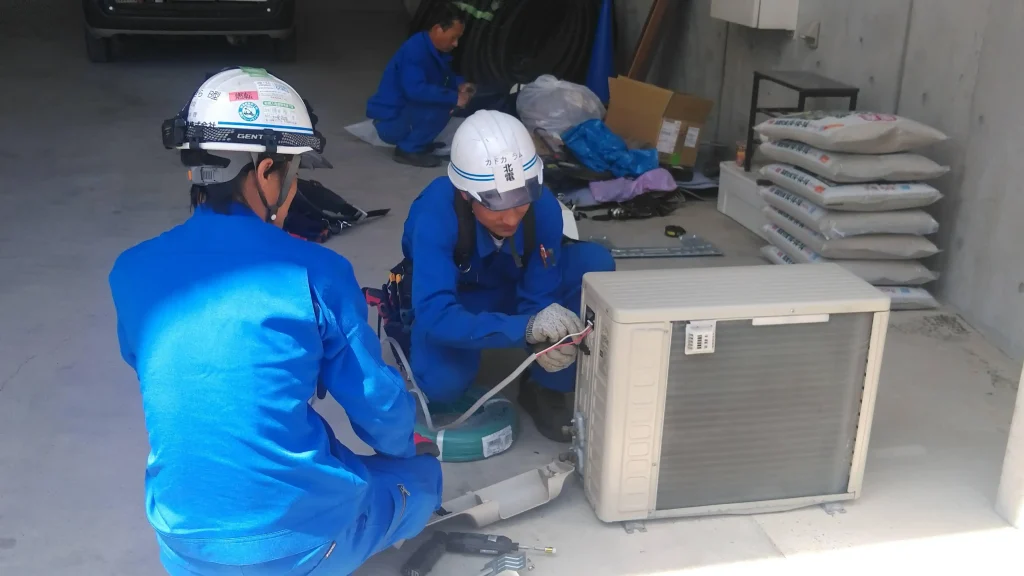
The Specified Skilled Worker (SSW) visa program, which is a popular route for Nepalese workers, offers opportunities in various sectors. While not always the absolute highest-paying, certain SSW categories provide competitive salaries and a clear path to employment.
Among SSW sectors, construction and manufacturing generally offer higher salaries.
- Average monthly salary: ¥220,000 to ¥285,000
- Salary depends on experience, location, and overtime work
Other popular SSW industries include:
- Caregiving
- Food service
- Food processing
Salary for Foreign Workers in Japan
The salary of foreign workers in Japan depends on several factors, including visa type, industry, work experience, and Japanese language skills. For many Nepalese workers, the Specified Skilled Worker (SSW) program has become one of the most common and reliable ways to work in Japan.
Specified Skilled Worker (SSW) Program
The SSW visa is a popular route for Nepali migrant workers to enter Japan. The SSW visa allows foreign workers to work in industries facing labor shortages in Japan. Under the SSW visa program, foreign workers are generally paid the same salary as Japanese workers doing similar jobs.
- Average monthly salary for SSW workers: ¥180,000 to ¥250,000
- Salary varies based on job type, location, experience, and overtime work
Some sectors offer higher pay than others. For example:
- Construction workers: around ¥220,000 to ¥285,000 per month
- Manufacturing jobs also offer competitive salaries
Japan vs. South Korea for Nepalese Workers
Many Nepalese workers compare Japan with South Korea before choosing where to work abroad.
South Korea’s EPS (Employment Permit System) program often provides:
- Higher minimum wages
- Better short-term savings
- Subsidized housing in many cases
Workers in South Korea may save around 1.5 to 2 lakhs NPR per month, while workers in Japan usually save around 1.2 to 1.5 lakhs NPR monthly.
However, Japan is often preferred for long-term opportunities because it offers:
- Better long-term career growth
- More stable work opportunities
- Possibility of longer stay
- Better options for family reunification in the future
Japan is also improving labor policies to ensure fair wages and better working conditions for foreign workers.
Other Visa Types and Salary Expectations
Besides the Specified Skilled Worker (SSW) visa, Japan offers other work visa options for foreign professionals in fields such as IT, engineering, finance, and the Technical Intern Training Program (TITP). Salary levels vary depending on qualifications, skills, industry, and Japanese language ability.
Under the TITP program, salaries are generally lower than SSW positions, but workers still receive stable income, practical training, and valuable international work experience. In contrast, highly skilled professionals in IT and engineering can earn significantly higher salaries and enjoy better long-term career opportunities in Japan.
For example, foreign IT engineers in Japan can earn around 60% higher salaries than their domestic counterparts. Roles in English teaching are also common for foreigners, though salaries may be lower compared to specialized technical fields.
Cost of Living in Japan
Understanding living costs is as important as salary when planning to work in Japan. While big cities offer higher wages, expenses are also higher. For a single person, monthly living costs usually range from ¥150,000 to ¥300,000, depending on lifestyle and location. On average, it is around ¥197,900 per month.
Here’s a breakdown of typical monthly expenses:
Expense Category | Estimated Monthly Cost (¥) |
Rent | ¥50,000 – ¥150,000 |
Food/Groceries | ¥40,000 – ¥60,000 |
Utilities | ¥15,000 – ¥25,000 |
Transportation | ¥5,000 – ¥15,000 |
Personal Care | ¥10,000 – ¥20,000 |
Miscellaneous | ¥10,000 – ¥30,000 |
- Rent: This is often the largest expense. Tokyo, for instance, is significantly more expensive than other cities. Tokyo can be roughly 30% more expensive than Osaka for similar living standards.
- Food and Groceries: Monthly food expenses can vary based on cooking habits and dietary choices.
- Utilities: Includes electricity, gas, water, and internet. Costs can fluctuate with seasonal usage, especially for heating and cooling.
- Transportation: Japan has an excellent public transportation system. Monthly passes are available and can be cost-effective for daily commutes.
For Nepalese workers, it is essential to budget carefully and consider the net income after all deductions and living expenses to determine actual savings potential.
Factors That Affect Salary in Japan
Several key factors significantly influence the salary in Japan, and understanding these can help foreign workers navigate the job market effectively.
1. Region
Geographic location plays a major role in determining salary levels. Large urban centers such as Tokyo, Osaka, and Nagoya generally offer higher salaries. In contrast, rural areas tend to offer lower salaries. As a result, average income can vary significantly depending on where one chooses to work.
2. Education Level
Education strongly influences earning potential in Japan. Individuals with higher academic qualifications, such as bachelor’s, master’s, or Ph.D. degrees, typically earn higher salaries. This advantage is especially evident in specialized fields like technology, finance, and healthcare, where advanced education often leads to better job opportunities
3. Experience Level
Work experience has a direct impact on salary growth. In general, salaries increase steadily with years of experience and accumulated expertise. Entry-level employees may experience rapid salary growth in the early stages of their careers, while mid-career professionals often see larger increases as they take on leadership or managerial roles.
4. Industry and Profession
The industry and specific job role significantly affect salary levels. High-demand sectors such as IT, finance, and healthcare typically offer higher compensation due to specialized skill requirements. Industries such as hospitality and retail provide comparatively lower salaries, despite offering a wide range of employment opportunities.
5. Age Group
Salaries in Japan traditionally increase with age, reflecting a seniority-based pay system. Earnings typically peak in an individual’s 50s before potentially decreasing slightly after retirement age due to re-employment systems.
Conclusion
For Nepalese job seekers, understanding the nuances of the Japanese job market is important. While the average salary in Japan can be attractive, it is also important to consider the net take-home pay after deductions and the local cost of living.
The Specified Skilled Worker (SSW) program offers a viable pathway for many, providing competitive salaries along with opportunities for long-term growth. Compared to other popular destinations like South Korea, Japan often stands out for its stability and stronger long-term prospects.
For those planning to start their career in Japan, Meihoku Training stands out as one of the best Japanese language institutes and training centers, providing strong language preparation, skill development, and guidance for students aiming to work in Japan with confidence.
Frequently Asked Questions
1. How much does Nepali earn in Japan?
A Nepali worker’s salary in Japan mainly depends on visa type, job sector, and experience.
- SSW (Specified Skilled Worker) jobs: ¥180,000 – ¥250,000 per month
- Construction / manufacturing: ¥220,000 – ¥285,000 per month
- Skilled jobs (IT, engineering): ¥300,000+ per month
After expenses, many Nepali workers typically save around NPR 1.2 to 1.5 lakh per month, depending on lifestyle and city.
2. What is the average salary in Japan for the year 2026 ?
The average salary is around ¥4.78 million per year (about ¥398,000 per month). For full-time professionals, it can go up to ¥6.2 million per year (about ¥515,000 per month).
3. What is the basic salary of a SSW visa in Japan?
Under the SSW program, the basic salary is usually ¥180,000 – ¥250,000 per month, with higher pay (up to ¥285,000) in fields like construction and manufacturing.
Start Your Journey Today
Admission for the 2025 intake is now open. Seats are limited. Contact us to schedule a free counseling session.
MEIHOKU TRAINING PVT. LTD.

Call Us
+977 9802325688, 01-4031688

Email Us
meihokunepal@gmail.com

Our Location
Sukedhara-04, Akhanda Marg, Kathmandu, Nepal